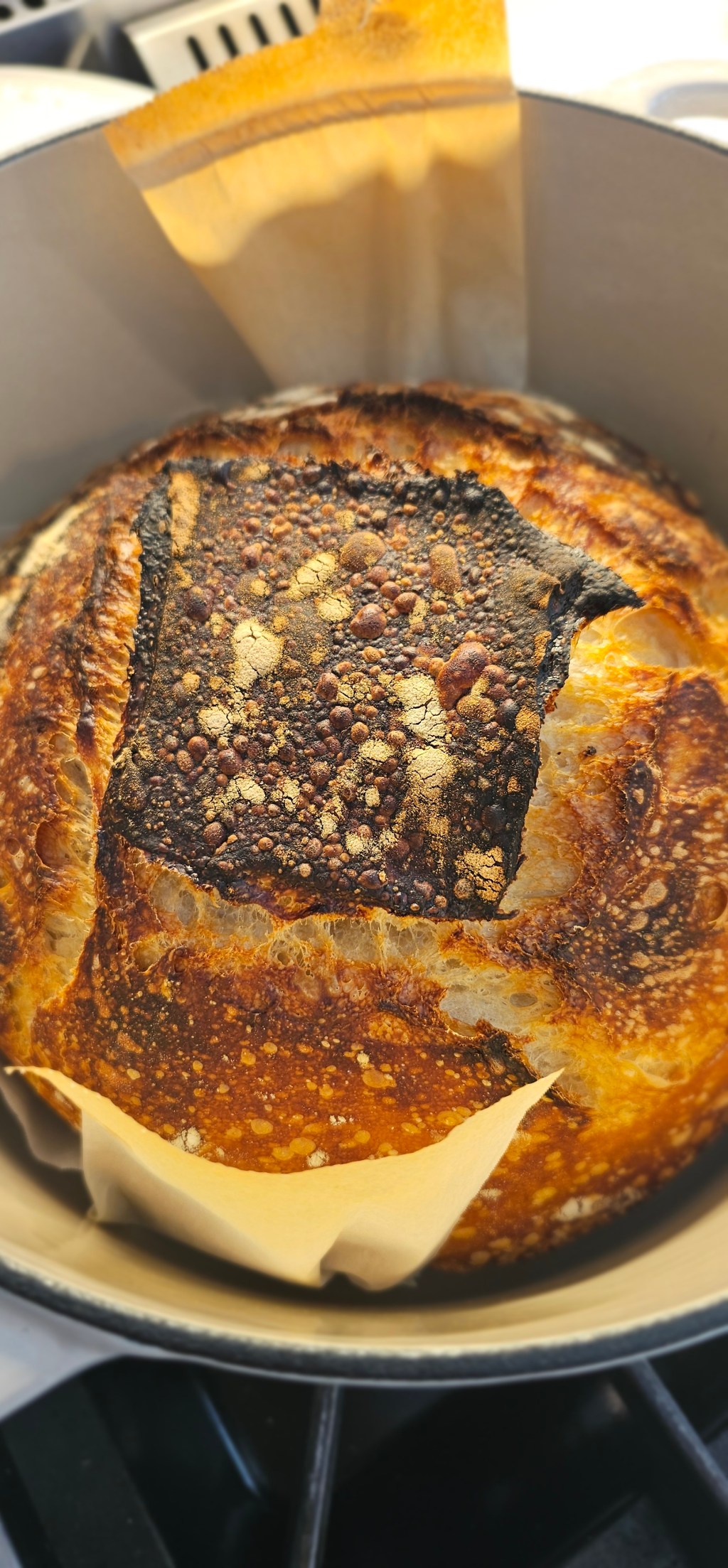
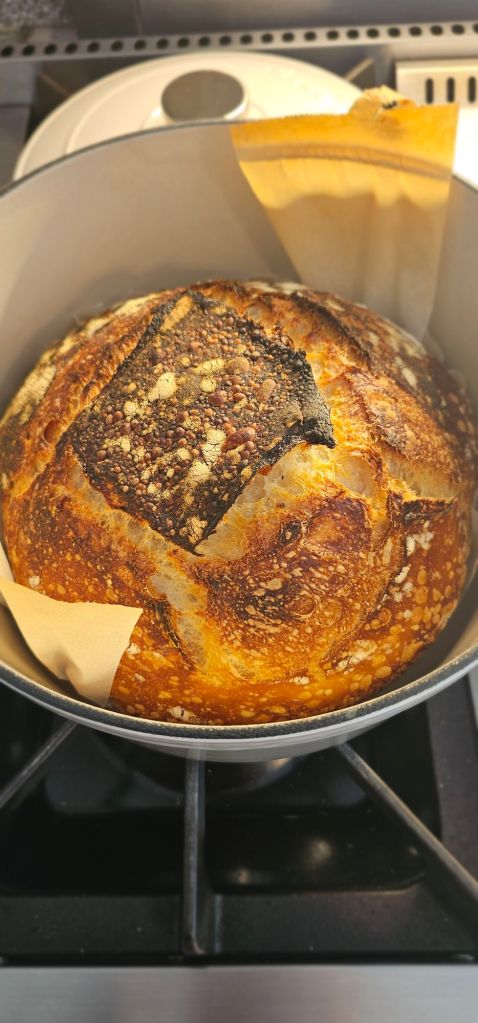
Perfect White Sourdough Bread
A classic white sourdough: open but tender crumb, crisp crust, and a mild, balanced tang. This formula (500 g flour, 72% hydration) is designed for home bakers and professional cooks alike — it works beautifully when started at 6:00 p.m. and given an overnight cold retard for flavor development. Below you’ll find a short introduction to sourdough, the full ingredient list, equipment notes, and a minute-by-minute timeline built around a 6:00 p.m. autolyse.
About Sourdough (brief)
Pro tip: always measure salt by weight. For predictable results use a scale and keep dough temperature near 72°F (22°C) during bulk fermentation unless you want a faster or slower rise.
Ingredients
| Ingredient | Weight | Notes |
|---|---|---|
| Bread flour | 500 g | High-protein for best structure |
| Water | 360 g (72%) | Room temperature — reserve 20 g if needed |
| Active sourdough starter (100% hydration) | 100 g | Fed and peaked |
| Morton kosher salt | 9 g | Weigh by grams (≈1¾ tsp by volume) |
Equipment
- Lodge 5.5‑quart Dutch oven (recommended) or similar 4.5–5.5 qt oven-safe pot
- Mixing bowl, bench scraper, digital scale
- Banneton or bowl lined with a heavily floured towel, parchment, lame or sharp knife
Timeline (Start: )
6:00 PM — Autolyse
6:45 PM — Add starter & salt
7:00–9:00 PM — Bulk fermentation with folds
9:00 PM — Preshape
10:00 PM — Final shape
10:15 PM — Cold proof
Next morning — Preheat (approx. 8:00–9:00 AM)
Bake (approx. 9:00 AM)
Cool
Chef’s Notes
- The Lodge 5.5 qt Dutch oven gives plenty of headroom for oven spring; use parchment for an easy transfer.
- If your kitchen is cool (<72°F / 22°C), allow extra bulk time (30–45 minutes) or keep dough at room temp longer before chilling.
- Morton kosher salt varies by crystal size compared with other brands — measure by weight for consistent results.
- For a milder flavor, add 1 teaspoon of honey during autolyse. For a richer crumb, add 20 g olive oil during mixing.


 Admiral's Table
Leave a comment